
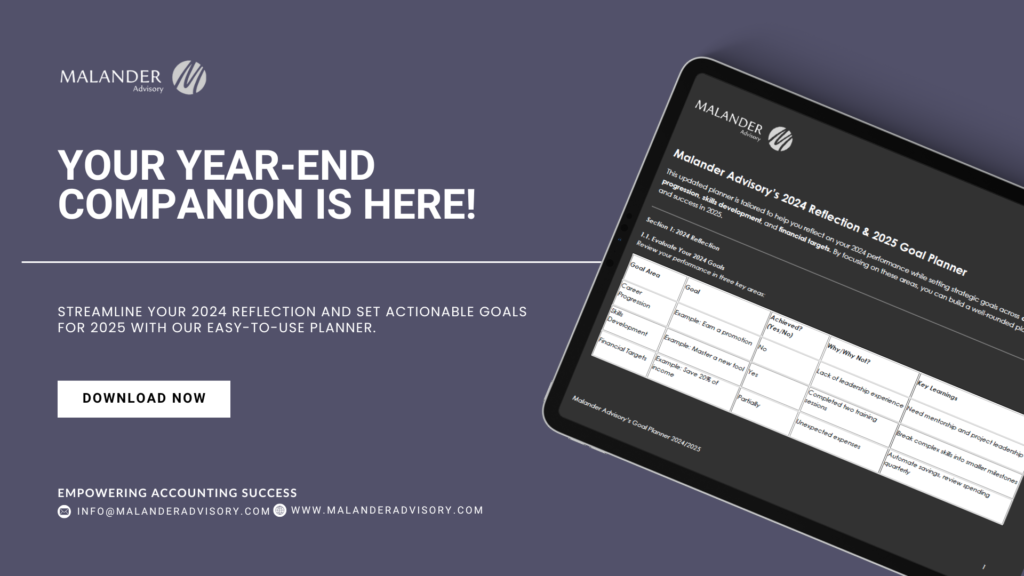
As 2024 draws to a close, the excitement of the holiday season is often accompanied by reflection. This is not just a time to celebrate milestones but also to evaluate your personal and professional progress. By assessing your 2024 achievements and planning effectively for 2025, you can set yourself up for even greater success in the year ahead.
Use this actionable guide and downloadable checklist to conduct a thorough review, draw key lessons, and map out your goals for the year ahead.
The 2024 Goal Assessment
One of the common mistakes most of us make, is preparing new goals for the new year before revisiting the goals and objectives you set at the start of the year. So, let’s take the opportunity, and start by revisiting the objectives you set at the beginning of 2024:
- Did you prioritise the right goals?
Break down your goals into categories: career progression, skills development, and financial targets.- Consider whether these goals aligned with your long-term aspirations.
- They key is focus; did you manage to prioritise the most important goals?
- What obstacles prevented success?
Reflect on challenges,- whether they were inside or outside of your control, and
- consider how to address them moving forward.
- Did you seek feedback or mentorship?
Guidance from colleagues, mentors, or supervisors can illuminate blind spots and provide actionable insights.
Tip: If you didn’t do it, categorise your 2024 goals into the following areas:
- Career Progression: Promotions, new roles, or responsibilities.
- Skills Development: Accounting CPD hours, technical training, or leadership skills.
- Financial Targets: Budget goals, income generation, or cost savings.
Lessons from 2024
Reflection isn’t just about identifying shortcomings; it’s also about celebrating successes.
- Identify patterns.
Did you experience repeated successes or challenges? These patterns can provide insight into what drives your performance and what may hinder it. - Celebrate achievements, no matter how small.
Progress is cumulative, and recognising even minor wins reinforces a growth mindset. - Avoid self-criticism and focus on solutions.
If some goals weren’t met, ask why without judgment. Was it a lack of time, resources, or focus? Frame setbacks as opportunities to improve.
Planning for 2025
Set yourself up for success with intentional, actionable goals using the SMART framework:
- Specific: Define exactly what you want to achieve.
- Measurable: Ensure your progress can be tracked.
- Achievable: Be realistic about your capabilities and resources.
- Relevant: Align goals with your long-term aspirations.
- Time-Bound: Assign deadlines to stay focused.
Practical Tips for Staying Accountable:
- Use tools to track progress: Digital planners, apps, or spreadsheets can help you monitor your goals.
- Engage with mentors: They provide encouragement and a fresh perspective.
- Adjust strategies: If something isn’t working, pivot without losing sight of your overall objectives.
Example Goals for 2025:
- Complete 40 hours of CPD for accounting and finance.
- Enhance leadership skills by attending two workshops or webinars.
- Mentor a junior colleague to develop coaching abilities.
- Increase personal savings by 15%.
Inspirational Takeaway
As you reflect and plan, remember that progress and consistency is better than perfection. Every small step brings you closer to your ultimate goals. Approach 2025 with confidence and ambition, knowing that your dedication will lead to extraordinary achievements.